
If you’re renovating a bathroom or wondering whether yours was done properly, you’ll come across a reference to AS 3740, the Australian Standard for waterproofing wet areas. It sounds technical, but understanding it in plain English helps you protect your home and know what good work looks like. At Sydney Waterproofing Services, we waterproof bathrooms to Australian Standards across Sydney, and this guide explains what AS 3740 is, what it requires, why compliance matters, and how to know your bathroom is done to standard.
| Quick answer
AS 3740 is the Australian Standard for waterproofing domestic wet areas. It sets out where waterproofing is required in a bathroom, such as the shower, floors and wet-area walls, and how it must be installed so water can’t reach the building structure. Meeting AS 3740 is essential for a compliant, long-lasting bathroom. Sydney Waterproofing Services waterproofs bathrooms to Australian Standards across Sydney. |
What is AS 3740?
AS 3740 is the Australian Standard titled “Waterproofing of domestic wet areas”. In plain terms, it’s the rulebook for how bathrooms, ensuites, laundries and similar wet areas in homes must be waterproofed. It exists because wet areas are where water damage most often begins: a shower or bathroom floor is exposed to water every day, and if that water reaches the timber, plaster or concrete of the building, it causes rot, structural damage and mould over time. The standard sets out where waterproofing must be applied and how it should be installed to prevent exactly that. Importantly, waterproofing to AS 3740 is tied to broader building compliance, as the National Construction Code requires wet areas to be waterproofed in line with the standard. So it isn’t optional or a matter of preference; it’s the benchmark that a compliant, properly built bathroom is expected to meet. For external areas like balconies and rooftops, a companion standard, AS 4654, covers above-ground external waterproofing, which is why our balcony waterproofing follows those external requirements rather than AS 3740.
What does AS 3740 require in a bathroom?
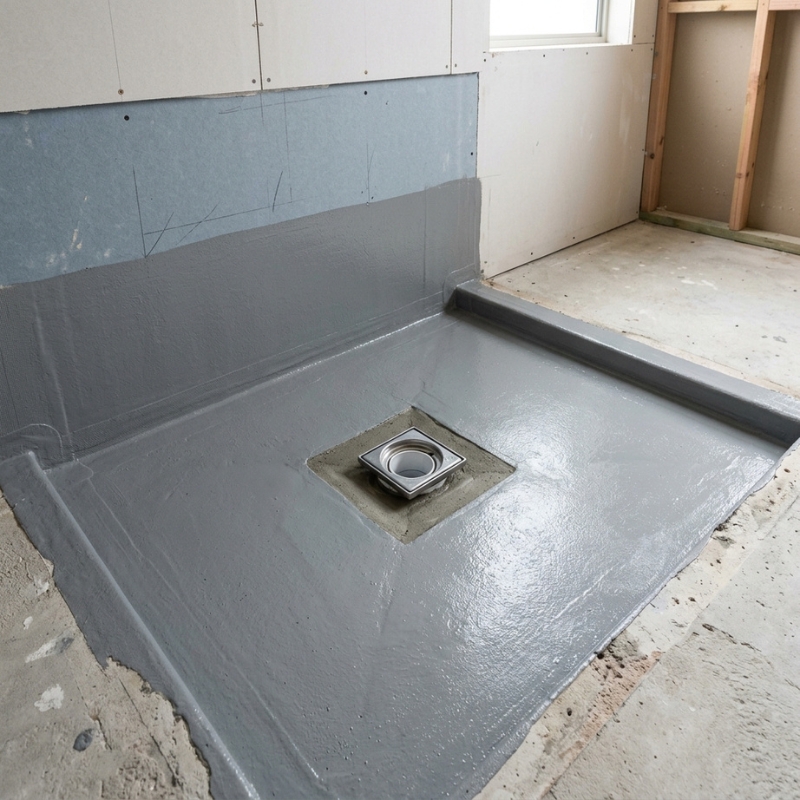
While the full standard is detailed and a licensed waterproofer works to its current requirements, the key idea is that waterproofing must cover the areas most exposed to water and seal the points where water could escape. In general terms, that includes:
| Area | What is generally required |
| Shower area | Waterproofing of the shower floor and walls to set heights within the shower enclosure |
| Bathroom floor | Waterproofing of the floor, particularly in and around wet zones and at any step-downs or hobs |
| Walls in wet areas | Waterproofing where walls meet floors and around the shower and bath to required heights |
| Penetrations and junctions | Sealing around drains, pipes, taps and floor-to-wall junctions where water can enter |
| Falls to drainage | Floors graded so water runs to the drain rather than pooling on the surface |
The exact heights, zones and details are specified by the current version of the standard, and a licensed waterproofer applies them to your particular bathroom. The principle to take away is that compliant waterproofing isn’t just a coat over the floor; it’s a considered system covering the right areas, to the right heights, with every junction and penetration sealed, so water simply cannot reach the structure. This is what separates a bathroom that lasts from one that leaks within a few years.
Why does AS 3740 compliance matter?
Meeting the standard isn’t box-ticking; it protects your home, your health and your money in several concrete ways. First and most obviously, it prevents leaks and the water damage that follows, including rot in timber, damage to plaster and structure, and the costly repairs that come with them. Second, it guards against mould, which thrives where water gets into walls and floors and can affect both the building and the health of the people living there. Third, compliant waterproofing matters at resale and during building inspections, since non-compliant or failing waterproofing is a red flag for buyers and can complicate a sale. It can also matter for insurance and warranty claims, where work not done to standard may not be covered. And of course, doing it to standard simply means the bathroom lasts, saving you the significant expense and disruption of tearing out and redoing a failed wet area a few years down the track. In short, AS 3740 compliance is what turns a bathroom from a future problem into one you can forget about.
Who can waterproof a bathroom to standard?
Waterproofing is a specialised trade, and in New South Wales it needs to be carried out by a licensed waterproofer, because getting it right requires the correct materials, preparation and detailing that come with training and experience. A qualified waterproofer knows how to prepare the surface, apply the membrane to the correct areas and heights, seal every junction and penetration, and ensure the falls direct water to the drain, all in line with the current standard. Just as importantly, professional work should come with proper documentation and a warranty, giving you confidence and a record that the job was done to standard, which is valuable for compliance, resale and any future claim. As a NSW Fair Trading licensed waterproofing company with more than twenty years of experience, and a member of the Master Builders Association and the Australian Institute of Waterproofing, we waterproof bathrooms to Australian Standards and back our workmanship with a seven-year warranty. Choosing a licensed, experienced professional is the surest way to know your bathroom is compliant and built to last.
Signs your bathroom waterproofing may not be compliant or is failing
Whether you’ve bought a home with an older bathroom or you’re unsure a previous job was done properly, there are signs worth watching for. Look out for water stains or damp patches on walls or ceilings near or below the bathroom, a persistent musty smell that can indicate hidden moisture or mould, tiles that are cracking, lifting or sounding hollow, grout and sealant that is constantly deteriorating, or paint bubbling and peeling on nearby walls. Efflorescence, the white powdery residue that appears where water moves through masonry, is another clue. Any of these can point to waterproofing that has failed or was never done to standard, and the trouble with wet-area leaks is that the visible damage is usually well behind the actual problem. If you notice these signs, it’s worth having the bathroom assessed sooner rather than later, because catching a waterproofing failure early means a smaller repair, while ignoring it lets water quietly damage the structure until a full rip-out and re-do is the only option.
Frequently asked questions
What is AS 3740?
AS 3740 is the Australian Standard for waterproofing domestic wet areas, such as bathrooms, ensuites and laundries. It sets out where waterproofing must be applied, to what heights, and how it should be installed so water can’t reach the building structure. It’s the benchmark a compliant, properly built wet area is expected to meet, and it’s tied to broader building compliance.
Is waterproofing a legal requirement in Australian bathrooms?
Yes. The National Construction Code requires wet areas to be waterproofed in accordance with the relevant standard, AS 3740, so a compliant bathroom must be waterproofed to that standard. It isn’t optional. Requirements can be updated over time, so a licensed waterproofer works to the current version to ensure your bathroom meets the applicable rules.
Does the whole bathroom floor need waterproofing?
AS 3740 sets out which areas require waterproofing, and the requirements are more extensive in and around wet zones like the shower, with specific rules for floors, wall junctions and penetrations. Whether the entire floor is waterproofed can depend on the bathroom’s design and construction. A licensed waterproofer applies the current standard to your particular bathroom to ensure it’s compliant.
Do I need a licensed waterproofer?
In New South Wales, yes, waterproofing should be carried out by a licensed waterproofer. It’s a specialised trade where correct materials, preparation and detailing are essential, and licensed work should come with documentation and a warranty. Using a licensed, experienced professional is the surest way to know your bathroom is waterproofed to standard and properly protected against leaks.
How long should compliant bathroom waterproofing last?
Well-installed, compliant bathroom waterproofing can last many years, often the life of the bathroom, and our workmanship is backed by a seven-year warranty. Actual lifespan depends on the quality of installation, the materials and ongoing maintenance, so no exact figure can be guaranteed. Keeping grout and sealant sound and addressing any issues early helps it last.
Final thoughts
AS 3740 is the standard that keeps Australian bathrooms watertight, setting out where and how wet areas must be waterproofed so water never reaches the structure, and compliance protects your home from leaks, mould and costly damage. The surest way to meet it is to use a licensed, experienced waterproofer whose work is documented and warranted. To have your bathroom waterproofed to Australian Standards, talk to Sydney Waterproofing Services about bathroom waterproofing on 1300 488 660.
| Sydney Waterproofing Services
Renovating or worried about your bathroom? Talk to Sydney Waterproofing Services. Call 1300 488 660 for waterproofing to Australian Standards. |


