


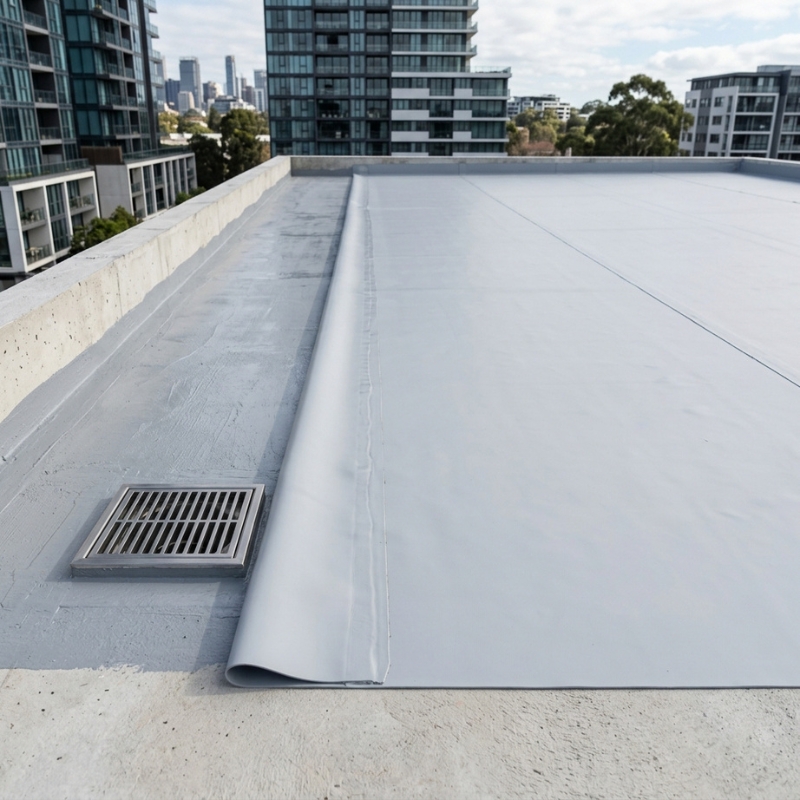
If you have a flat or low-pitch roof in Sydney, the membrane that waterproofs it is doing a big job, quietly protecting everything below from the weather. Choosing the right membrane, and keeping it in good condition, makes the difference between a roof that stays dry for years and one that leaks. At Sydney Waterproofing Services, we waterproof rooftops across Sydney, and this guide explains the main membrane types, how long each tends to last, and how to prepare your rooftop for winter so it sees out the wet season.
| Quick answer
Rooftop waterproofing uses a membrane to seal the roof against water. Common types include liquid-applied polyurethane, acrylic and elastomeric coatings, and sheet or torch-on membranes, each with different strengths, lifespans and costs. The right choice depends on your roof, its use and its exposure. With good installation and maintenance, quality membranes last many years. Sydney Waterproofing Services waterproofs rooftops across Sydney. |
Why rooftop waterproofing matters in Sydney
Sydney’s climate is tough on rooftops. Long, hot, sunny stretches break down materials with UV exposure, while heavy downpours test every seam and drain, and flat or low-pitch roofs in particular have to shed a lot of water quickly. Unlike a steep tiled roof that sheds water by gravity, a flat rooftop relies almost entirely on its waterproofing membrane and drainage to stay dry, so the membrane is the roof’s main line of defence. When it’s in good condition, it keeps water out reliably. When it ages, cracks or is poorly installed, water finds its way in, and because a roof sits over everything, a rooftop leak can affect the whole building beneath it. Ponding water, where the roof doesn’t drain properly and water sits after rain, makes things worse by keeping the membrane under constant load. This is why choosing a suitable membrane, installing it properly and keeping it maintained matters so much for a Sydney rooftop. The same membrane principles apply to raised outdoor areas too, which is why our balcony waterproofing uses closely related systems and detailing.
What are the main types of rooftop waterproofing membranes?
There are several membrane systems used on Sydney rooftops, and the right one depends on the roof, how it’s used and its exposure. The main types are:
| Membrane type | Best suited to | Indicative lifespan | Notes |
| Liquid-applied polyurethane | Flat roofs, complex shapes and detailing | Long-lasting with maintenance | Seamless and flexible; bonds to the substrate with no joins |
| Acrylic/elastomeric coatings | Exposed roofs needing UV resistance and reflectivity | Good, and often recoatable over time | Water-based and reflective; can help keep the roof cooler |
| Sheet / torch-on membranes | Larger flat roofs and decks | Durable when well installed | Applied in rolls; robust but needs skilled installation of the seams |
| Reinforced liquid systems | High-traffic or more demanding areas | Long-lasting | A liquid membrane with a reinforcing fabric for extra strength |
Quality also comes down to the system used. We work with established membrane brands such as Sika, BASF and Mapei, chosen to suit each rooftop, because a proven system installed correctly is what delivers a long, reliable service life. A cheaper membrane or a poor installation is a false economy on a roof, where a failure means water over the whole building. The best choice for your rooftop is something a waterproofer can recommend after seeing the roof, its condition, how it’s used and its exposure.
How long does a rooftop membrane last?
It’s a fair question, and the honest answer is that it depends. A quality membrane, correctly installed and maintained, can last many years, and some systems are designed for long service lives, but the actual lifespan of any rooftop membrane comes down to several factors rather than a single number. The quality of the membrane and system matters, as does the standard of installation, since even the best membrane fails early if it’s poorly applied or the detailing at seams, drains and upstands is wrong. Exposure plays a big role, because harsh sun, heavy rain and ponding water all shorten a membrane’s life. And maintenance is crucial: a membrane that’s inspected, kept clear of debris and recoated or repaired when needed lasts far longer than one that’s neglected. Rather than promise an exact figure, which no one can honestly guarantee, the sensible approach is to choose a suitable quality system, have it installed properly, and maintain it. Our rooftop work is backed by a seven-year workmanship warranty, and with good care a well-chosen membrane can protect your roof well beyond that.
How do you prepare your rooftop for winter in Sydney?
Winter and the wet season are when a rooftop earns its keep, so a little preparation beforehand pays off. Before the heavy rain arrives, it’s worth:
- Clearing drains, gutters and outlets of leaves and debris, so water can escape rather than pooling on the roof.
- Checking for ponding water after rain, since areas that don’t drain point to a fall or drainage issue worth addressing.
- Inspecting the membrane for cracks, blisters, splits or worn areas, especially at seams, edges and around penetrations.
- Checking flashings and upstands where the roof meets walls, pipes and other elements, as these junctions are common leak points.
- Attending to any small issues before the wet season, because a minor repair now is far cheaper than a leak and interior damage later.
If your rooftop is older or you’ve noticed any of the warning signs below, a professional inspection before winter is the safest move, catching problems while they’re still small and giving the membrane the best chance of seeing out the wet season without a leak.
Signs your rooftop membrane needs attention
A rooftop membrane usually gives warning before it fails completely, so knowing what to look for lets you act early. Ponding water that sits on the roof long after rain is a common sign of drainage or falls problems and puts the membrane under strain. Visible cracks, splits, blisters or bubbling in the membrane surface indicate it’s ageing or has been compromised. Areas that look worn, thin or brittle, particularly where sun exposure is greatest, are weak points. And of course, any signs of water inside the building below, such as stains, damp or peeling paint on ceilings, mean water is already getting through and the leak needs finding and fixing promptly. Because a rooftop sits over the whole building, it’s one area where it really doesn’t pay to wait; the sooner a failing membrane is repaired or renewed, the less damage water does in the meantime. If you spot any of these signs, it’s worth having the rooftop inspected so the problem is properly diagnosed and fixed at the source.
Frequently asked questions
What is the best waterproofing membrane for a flat roof?
There’s no single best membrane; it depends on the roof, how it’s used and its exposure. Liquid-applied polyurethane suits complex shapes with its seamless finish, sheet membranes suit larger flat roofs, and reflective coatings suit exposed roofs. The best choice comes from a waterproofer assessing your roof and recommending a suitable quality system installed correctly.
How long does rooftop waterproofing last?
A quality membrane, correctly installed and maintained, can last many years, with some systems designed for long service lives. Actual lifespan depends on the membrane, the installation, exposure and maintenance, so no exact figure can be guaranteed. Our rooftop work is backed by a seven-year workmanship warranty, and good maintenance helps a membrane last well beyond a minimum expectation.
Can you waterproof over an existing roof membrane?
Sometimes, if the existing membrane is sound and compatible, a recoat or overlay can extend its life at lower cost than full replacement. If the existing membrane has failed or isn’t compatible, it usually needs removing and replacing so the new system performs properly. An inspection determines whether an overlay is suitable or a full replacement is the better option.
How often should a rooftop membrane be inspected?
It’s wise to inspect a rooftop at least once a year, and before the wet season, as well as after any severe weather. Regular checks catch small issues, like blocked drains, minor cracks or ponding, before they become leaks. For older roofs or those showing wear, more frequent professional inspection is sensible, since a rooftop leak affects the whole building beneath it.
Why does water pond on my flat roof?
Ponding usually means the roof isn’t draining properly, either because the falls are too flat or incorrect, or because drains and outlets are blocked or inadequate. Standing water puts the membrane under constant load and increases the risk of leaks. The fix involves clearing or correcting the drainage and, where needed, adjusting the falls so water runs off as it should.
Final thoughts
A rooftop is only as good as its membrane, so choosing a suitable quality system, having it installed properly, and maintaining it, especially before winter, is what keeps a Sydney roof dry for years. Clearing drains, checking for cracks and ponding, and acting on early warning signs all help your membrane go the distance. To have your rooftop assessed or waterproofed, talk to Sydney Waterproofing Services about rooftop waterproofing on 1300 488 660.
| Sydney Waterproofing Services
Flat roof due for attention before winter? Talk to Sydney Waterproofing Services. Call 1300 488 660 for a rooftop inspection. |


