


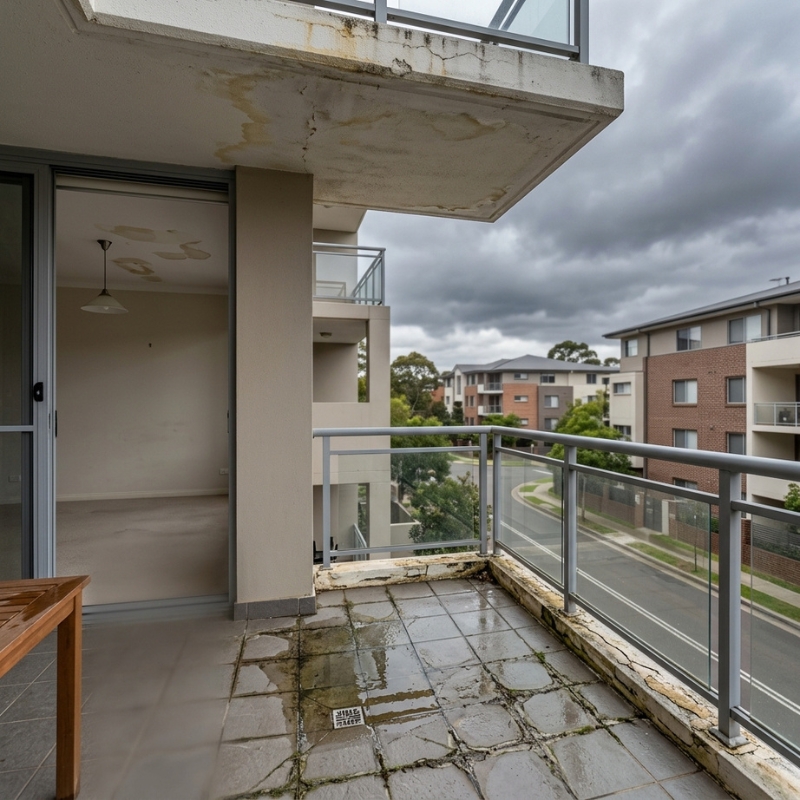
A leaking balcony is one of the most common and most frustrating water problems in Sydney homes and apartments, and it rarely fixes itself. Water stains appearing on the ceiling below are usually the first sign, and by then the leak has often been at work for a while. At Sydney Waterproofing Services, we diagnose and repair leaking balconies across Sydney every week, and this guide explains the seven most common causes, how each one is properly fixed, and what you can do to prevent leaks in the first place.
| Quick answer
Balconies leak when the waterproofing fails or was never adequate: an aged or cracked membrane, failed grout and sealant, poor drainage or falls, damaged flashings, movement cracks, or tiles laid without a proper membrane underneath. Water then tracks into the building. Fixing it usually means addressing the membrane, not just the surface. Sydney Waterproofing Services diagnoses and repairs balcony leaks across Sydney. |
How a balcony is meant to keep water out
To understand why balconies leak, it helps to know how they’re meant to stay dry. A properly built balcony doesn’t rely on the tiles to keep water out; tiles and grout are not waterproof on their own. The real barrier is a continuous waterproofing membrane installed beneath the tiles, over a correctly graded surface that falls towards a drain. Water that gets through the tiles and grout, and it always does over time, is meant to be caught by that membrane and channelled to the drain before it can reach the structure. Flashings seal the vulnerable junctions where the balcony meets walls, doors and drains. When all of this is done correctly, the balcony sheds water reliably for years. Leaks happen when one of these elements fails or was never installed properly, letting water past the membrane and into the building below. That’s why almost every balcony leak traces back to the waterproofing system rather than the tiles you can see.
The 7 most common causes of balcony leaks
- An aged or failed membrane
The most common cause of all. Waterproofing membranes don’t last forever; over the years they can become brittle, crack or break down, especially with sun and weather exposure. Once the membrane fails, water passes straight through to the structure. The fix is to replace the membrane, which usually means lifting the tiles, installing a new membrane and re-tiling, so the barrier is restored at the source.
- Cracked or missing grout and sealant
Grout lines and the flexible sealant around edges and junctions deteriorate over time, cracking or falling out and letting more water down to the membrane. On a sound balcony, this is manageable, but combined with an aged membrane it accelerates leaks. Re-grouting and re-sealing helps, though if water is already getting through, the membrane itself usually needs attention too.
- Poor or blocked drainage
If the balcony drain is blocked or inadequate, water has nowhere to go and pools on the surface, sitting against the membrane and edges until it finds a way in. Clearing and maintaining drains, and making sure drainage is adequate, is essential. Where the drain detailing itself is faulty, it needs correcting as part of the repair.
- Incorrect falls and ponding water
A balcony floor should be graded so water runs to the drain. When the falls are wrong or flat, water ponds instead of draining, and standing water is far more likely to find its way through any weakness. Correcting the falls, usually by re-screeding to the right grade before re-waterproofing, is the proper fix and stops ponding for good.
- Damaged or missing flashings
Flashings seal the critical junctions where the balcony meets walls, doorframes and the drain. If they’re damaged, poorly installed or missing, water enters at these edges, which is one of the most common leak points. Repairing or correctly installing flashings, and detailing these junctions properly during waterproofing, closes off this path.
- Structural or movement cracks
Buildings move and settle, and cracks can form in the balcony slab or at junctions. These cracks can tear a rigid membrane or open a new path for water. The fix involves repairing the cracks and using a membrane system with enough flexibility to accommodate movement, so future movement doesn’t simply reopen the leak.
- Tiles laid without a proper membrane
Sometimes a balcony was never waterproofed correctly, with tiles laid over a surface that was only sealed, or with no membrane at all. In these cases there’s no reliable barrier, and leaks are only a matter of time. The real fix is to install a proper membrane system, which means removing the tiles and waterproofing the balcony as it should have been done originally.
Why sealing the surface rarely fixes a leaking balcony
When a balcony leaks, the tempting quick fix is to seal the surface, re-grout the tiles or brush on a coating and hope the problem goes away. It rarely does, and understanding why saves a lot of money. The leak is almost never caused by the visible surface; it’s caused by a failure in the membrane beneath. Sealing over the top might slow water for a while, but it doesn’t restore the barrier that has failed, so the leak returns, often worse, while the water continues to damage the structure underneath in the meantime. This is the same principle that applies to rooftop waterproofing and other wet areas: the membrane is what keeps water out, so a lasting repair has to address the membrane, not just the finish on top. That usually means lifting the tiles, fixing the underlying cause, and installing a new membrane properly. It’s more work than a surface seal, but it’s the difference between fixing the leak and merely hiding it.
How to prevent balcony leaks
While no balcony lasts forever, a few simple habits go a long way towards preventing leaks and catching problems early:
- Keep drains and outlets clear so water can always escape rather than pooling.
- Check grout and sealant periodically, and have cracked or missing grout and sealant attended to before water works its way down.
- Watch for ponding after rain; water that sits rather than draining is an early warning sign.
- Act on the first signs of a leak, such as stains, damp or paint bubbling on the ceiling below, rather than waiting.
- Have an ageing balcony inspected, since membranes have a finite life and renewing one before it fails is cheaper than repairing water damage.
Catching a balcony problem early almost always means a smaller, cheaper repair, whereas ignoring it lets water quietly damage the structure until a full rebuild is needed.
Frequently asked questions
Why is my balcony leaking into the room below?
Water is getting past the balcony’s waterproofing membrane and tracking into the structure, then showing up as stains or damp on the ceiling below. Common causes include an aged or failed membrane, cracked grout and sealant, blocked drainage, poor falls or damaged flashings. The leak needs diagnosing at the source, because the visible surface is rarely the real cause.
Can a leaking balcony be fixed without removing the tiles?
Occasionally, if the membrane is sound and the issue is minor, such as grout or sealant, a repair without full tile removal may be possible. More often, a leaking balcony means the membrane has failed, and a lasting fix requires lifting the tiles, addressing the cause and installing a new membrane. An inspection determines which applies to your balcony.
Is a leaking balcony the owner’s or strata’s responsibility?
In a strata building, balcony waterproofing often involves common property, which is generally the owners corporation’s responsibility, though it depends on the strata plan and by-laws. For a standalone home, it’s the owner’s. Because it varies, check your strata records or arrange an assessment so the source and responsibility are established before repairs go ahead.
How do you find where a balcony is leaking?
A waterproofer investigates the balcony’s condition, checks the membrane, drainage, falls, grout, sealant and flashings, and traces where water is entering, sometimes using targeted water testing. Because water can travel before it appears below, the visible stain isn’t always beneath the entry point, so proper diagnosis matters before any repair to make sure the real source is fixed.
How long does a balcony waterproofing repair last?
A proper repair with a quality membrane, correctly installed, can last many years, and our workmanship is backed by a seven-year warranty. Longevity depends on the system, the installation, exposure and maintenance, so no exact figure can be guaranteed. Keeping drains clear and grout and sealant sound helps a repaired balcony stay watertight for as long as possible.
Final thoughts
Sydney balconies leak for a handful of predictable reasons, almost all of which come back to the waterproofing membrane rather than the tiles you can see, which is why surface fixes rarely last. The reliable solution is to diagnose the real cause and repair it properly, and the sooner that happens, the smaller the job. If your balcony is leaking, arrange an inspection for balcony waterproofing with Sydney Waterproofing Services on 1300 488 660.
| Sydney Waterproofing Services
Balcony leaking into the room below? Talk to Sydney Waterproofing Services. Call 1300 488 660 to arrange an inspection. |

)
&description=&image=https://sydneywaterproofingservices.com.au/wp-content/uploads/2026/09/Why-Do-Sydney-Balconies-Leak-7-Common-Causes-and-How-to-Fix-Them.jpg)